
Express and Progress
New stories, articles and essays in the pipeline

This fall, I’m breaking from form. New writing is in the pipeline. Continuing to honor the request of my late friend, mentor and teacher, historian John David Lewis, with whom I conducted a final interview before he succumbed to cancer, who implored me and other Objectivist intellectuals to write personal essays to enlighten the world, I’m doing exactly this.
Some articles will appear in intellectual media. Classic Chicago Magazine published my essay about my first act of intellectual activism. I was eight years old in suburban Chicago. My best friend was withdrawn one day as we walked home from school to his lakefront home where we would play in trees and bushes on the bluff which was his backyard overlooking Lake Michigan. When I asked what was wrong, he told me that his family was being forced by the government to move because of something called eminent domain. Read about our subsequent moral crusade here.
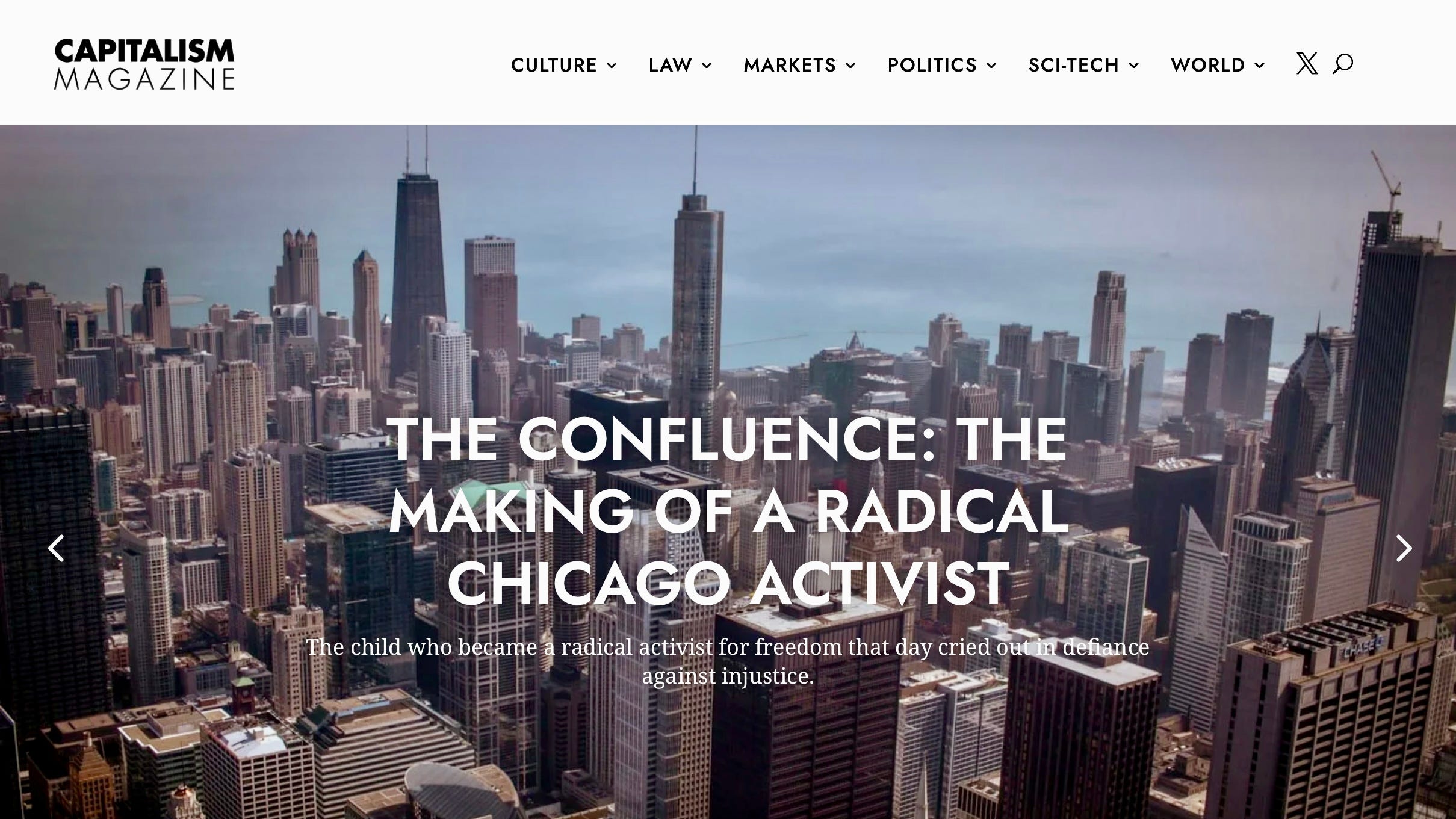
Six years later, I was assaulted by Chicago Police in another act of injustice. This time, as I exercised freedom of assembly and speech at the age of 14 while protesting the U.S. vice-president at a labor union rally in Chicago, I was radicalized. I’ve thought about that day and what it means over the years. For the first time, I’ve written about the siege in a new essay in Capitalism Magazine, “The Confluence: The Making of a Radical Chicago Activist.” You can read the essay here.
A couple of years later, I came out as gay (which is another story). I’m proud to have avoided being marginalized as a gay journalist, despite pressure to define my journalism by my sexuality. Recently, I contracted with a credible, 30 year-old, gay-themed press, The Gay & Lesbian Review (formerly The Harvard Gay & Lesbian Review). For the first time in over 30 years of journalism, I’ll write about being gay for the publication’s revolving feature, Here’s My Story. The essay debuts in an upcoming issue.
I hope to write other pathbreaking articles for The Gay & Lesbian Review. In the meantime, I’ve returned to interview an American hero. I’m proud that many of my interviews have been conducted with important historical figures in the United States of America who afforded me an interview more than once, sometimes more than twice, indicating trust in me as a writer and reporter. These figures include Vincent Bugliosi, Lasse Hallstrom, Pulitzer Prize-winning author David Halberstam, screenwriter and Best Picture Oscar-winning movie director Robert Benton, who praised and endorsed my first book before he died earlier this year, and my heroine, the late Olivia Newton-John.
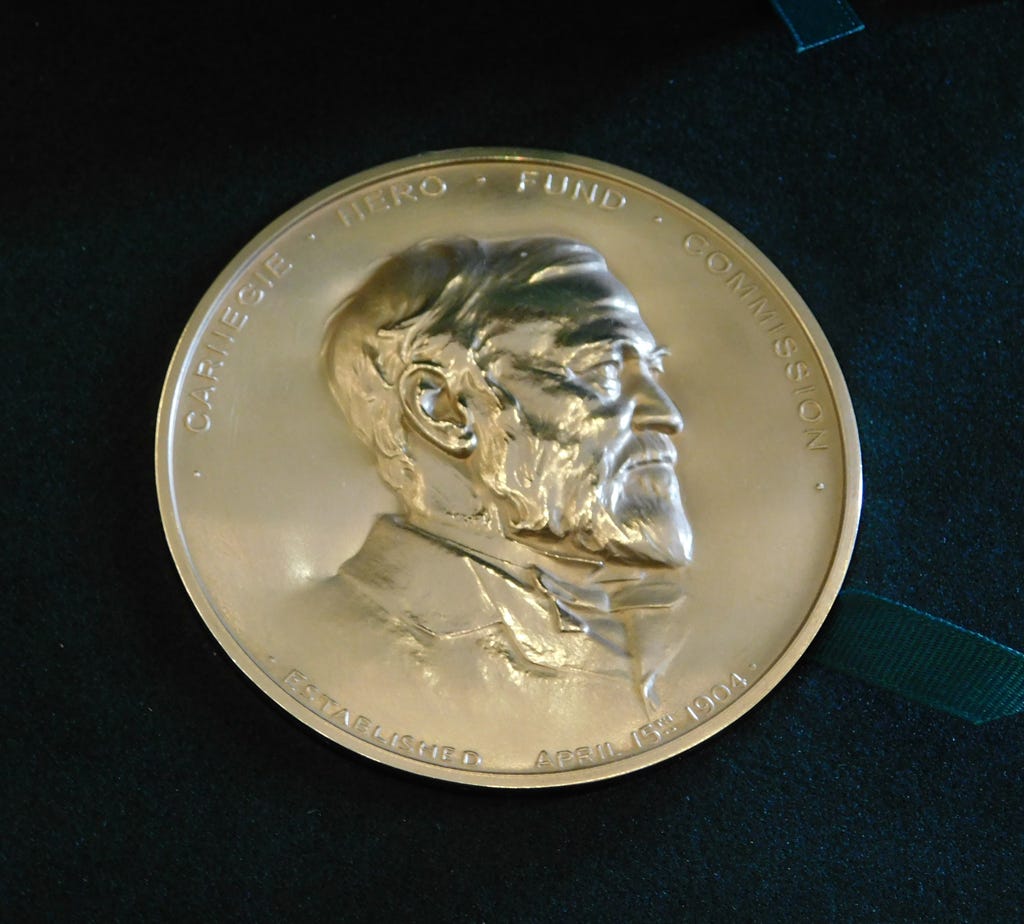
In this fine company of VIPs who invited me to interview them again, let me add someone who ought to be as famous: Henry Reese. This 75-year-old scholar was interviewing Salman Rushdie in 2022 when Rushdie was savagely attacked by a 24 year-old Islamic assassin. Mr. Reese, whom I interviewed at his office in Pittsburgh in 2023, leaped to save Rushdie’s life—and did. Last month, Henry Reese was awarded the Carnegie Hero medal.
I interviewed Mr. Reese again in the aftermath of last year’s Pittsburgh-area attempt to assassinate President Trump. My new interview, conducted weeks before Charlie Kirk’s assassination, profiles the only American—a private citizen, businessman, Jew, intellectual and older man—to have recently saved someone targeted by the world‘s worst state sponsor of terrorism from an assassin. The article will be published this winter in Pittsburgh Quarterly.
These new and forthcoming articles mark both my personal progress and my ability to express myself in various art forms, echoing Leonard Peikoff’s call to action during his Objectivist Conference (OCON) keynote speech in Las Vegas in 2009. Dr. Peikoff’s challenge was a historic moment. I’ve been creating ever since—in the name of the best within us, as Ayn Rand wrote. As I write, my Classic Chicago Magazine editor requested an interview about my first book. Besides the new book and interview, and the new essays and articles, I’ll soon announce on Short Stories by Scott Holleran details of a related project: the first movie—a micro-short film—inspired by my fiction writing.
Related Articles, Episodes and Stories
Thirty Years in the Press

Interviews have always been a major part of my journalism. From my articles for a school newspaper and an alternative press in Chicago to Autonomia, the interview is one of my most practiced, skilled and methodical formats. I possess a natural (and arguably inappropriate) curiosity in the company of stars, strangers and ordinary people. Even as a boy, if I wanted to know something, whether the cause of a handicapped person’s handicap or the cause of an action in the presence of someone in authority, such as a firefighter or police officer, I walked up and asked what was happening and why. To family, friends’ parents, neighbors, teachers, priests, nuns and policemen, I think I must’ve been an exhausting child. As I started to read about sex in books I discovered—and in a magazine titled

Just Deserts: Actor Tom Sizemore (1961-2023)

“There was something about the alienation and beauty of actors like Montgomery Clift, Marlon Brando and James Dean that captivated me,” actor Tom Sizemore wrote in his memoir. “Still, it was more than reverence that I had for them…” Sizemore, a convicted criminal who died after struggling with drug addiction—the scourge of our times—and suffering a stroke last month, was born in Detroit and raised in a home near Tiger Stadium. He had been vilified and ridiculed in the press over his priapism—a painful condition in which an erection lasts for an extended time period—and claims that were magnified by the Me, Too movement.
Movies: Dear Evan Hansen

Without giving away the twist, and without having seen the original Broadway or any stage production, Dear Evan Hansen elicits a range of emotions. The imperfect movie runs long for a stretch. It’s an earnest movie about living a lie which is loaded with powerful music, songs and scenes. Casting is excellent. Julianne Moore, leading man Ben Platt and Amy Adams—and this goes for everyone in the cast—are outstanding.
Thirty Years in the Press

Strictly speaking, I am not a news reporter, though I do report the news. But, when I have and do—throughout my three decades of journalism—I tend to write in extremely focused detail about certain issues, history and themes. This approach has led to some of my most commercially successful writing (which isn’t saying much—I add this because it’s true). Fidelity to investigating, learning and reporting the truth drives my news journalism, from being the impetus for my articles about the crash of TWA 800 to
Oscar’s Best 1930 Picture

All Quiet on the Western Front is a powerful, affecting picture. I’ve never read the novel by Erich Maria Remarque (published on this date in 1928). I had never seen the film, which debuted in 1930 on the cusp of the rise of National Socialism in Germany. This is relevant because the story follows several young German soldiers during the Great War, otherwise known as World War One. I knew only in advance of watching the film that the novel and movie have the reputation of expressing an anti-war theme. To this end, the Universal Pictures movie, the first based on a work of fiction to win the Academy Award for Best Picture, displays effects — so-called special effects — with perfection.
Movies: Rio Bravo

Watching Rio Bravo is time well spent. The classic 1959 Western by director Howard Hawks is deceptive in its goodness, so that it’s easy to underestimate the value. Many of today’s Americans take John Wayne’s sensibility for granted or they hold it in contempt, if they know of him. In